14
Feb
Feb
Deep Web Technologies president, founder, and CTO Abe Lederman shares some thoughts on discovery services at the Deep Web Technologies Blog.
Deep Web Technologies president, founder, and CTO Abe Lederman shares some thoughts on discovery services at the Deep Web Technologies Blog.
Multilingual federated search, the ability to search and to view results from foreign language sources in your own language, may be just an interesting idea to some but there is a strategic value to the technology. Consider this article published by the BBC in March of 2011: China ‘to overtake US on science’ in two years. If the prediction of the UK’s national science academy, the Royal Society, proves true then sometime next year China will produce scientific research papers at a faster rate than the current leader, the U.S.
Researchers in the English-speaking world have mostly been restricted to searching only English language sources since the tools for simultaneously searching foreign language sources and for performing the translations haven’t existed until recently. Thus, opportunities to search scholarly journals in Chinese, Japanese, Portuguese and other languages associated with countries producing a great volume of science output are being missed. In an economic climate where performing research and getting products to market quickly translates to that competitive edge that leads to greater profits, being able to scour the research Web quickly, effectively, efficiently, and on an ongoing basis is critical to developing and maintaining a competitive edge.
Blog sponsor Deep Web Technologies has developed a patent pending multilingual search version of its Explorit federated search application that integrates the search and translation technologies making for a seamless and productive research environment for scientists, engineers, and researchers in business, science, and technology.
[ Editor's note: Blog sponsor Deep Web Technologies has announced important enhancements to its federated search technology that allows its Explorit Research Accelerator product to go deeper into the deep Web than ever before. ]
SANTA FE, N.M., June 21, 2011 /PRNewswire/ — Deep Web Technologies?, the leader in federated search of the Deep Web, today announced full integration of multilingual and multimedia search into the company’s market-leading Explorit? Research Accelerator. The patent-pending multilingual search capability is the first such feature ever offered for Deep Web search.
Multilingual federated search, unveiled June 11, 2011 in Helsinki at the International Council for Scientific and Technical Information’s Summer Conference and originally only available as a beta release to users of the WorldWideScience.org gateway to global science, is now available to all Deep Web Technologies customers who require seamless access to foreign language documents. Explorit’s multilingual search capability translates a user’s search query into the native languages of the collections being searched, aggregates and ranks these results according to relevance, and translates result titles and snippets back to the user’s original language. The multilingual translation functionality, powered by Microsoft?, makes it simple to search collections in multiple languages from a single search box in the user’s native language.
Multimedia federated search, first introduced in the WorldWideScience.org and ScienceAccelerator.gov portals, allows for seamless integration of audio, video, and image content sources into Explorit. WorldWideScience.org searches seven multimedia sources: CDC Podcasts, CERN Multimedia, Medline Plus, NASA, NSF, NBII LIFE, and ScienceCinema. ScienceCinema is an exciting example of the ability to search speech indexed multimedia content. The DOE Office of Scientific and Technical Information (OSTI) developed ScienceCinema in partnership with Microsoft. When multimedia sources are included in an Explorit search, images and links to multimedia content can be presented alongside text results or in a separate results tab.
[ Editor's note: This article was first published in the Deep Web Technologies Blog. ]
WorldWideScience is a global science gateway that combines national and international scientific databases into a search engine.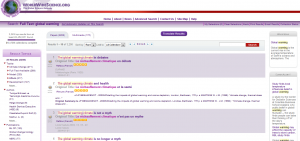 From a single search form, a scientist, researcher, or curious citizen can search over fifty databases in English and now 22 multilingual sources (with translation to the searcher’s native language) and seven multimedia sources. WorldWideScience is the brainchild of the director of the DOE Office of Scientific and Technical Information (OSTI), Dr. Walt Warnick. The gateway is maintained and hosted by OSTI and governed by the WorldWideScience Alliance.
Deep Web Technologies is proud to have developed the federated search technology behind WorldWideScience. And, with the cooperation of the Microsoft Translation services team, Deep Web Technologies also implemented the multilingual technology. It was a major undertaking but a worthwhile one for the science community, whose members can now greatly expand their reach to scientific papers in languages beyond their own.
Dr. Warnick was invited to deliver a presentation at the 14th session of the United Nations’ Commission on Science and Technology (CSTD). In a post at the OSTI Blog, Dr. Warnick shares the warm reception that WorldWideScience received.
I wish more of my OSTI colleagues could have been in Geneva to share the warm response from the attendees. Several country representatives offered up new sources for WorldWideScience (WWS). Another member of the audience searched mobile WWS for his own name and remarked that he found many of his papers. I received enthusiastic comments, so many that I couldn?t address all of them because of time constraints. Significantly, the Chair of CSTD volunteered to pay the costs of becoming a member of the WorldWideScience Alliance. There was great excitement about the possibilities for its use within the home countries of the attendees and how WWS advances the goals of CSTD.
The paper “Breaking down language barriers through multilingual federated search” co-authored by Abe Lederman (founder and president of Deep Web Technologies), and Dr. Warnick, Brian Hitson, and Lorrie Johnson from OSTI, explains the importance of the gateway:
“WorldWideScience.org (WWS) is a global science gateway developed by the US Department of Energy Office of Scientific and Technical Information (OSTI) in partnership with federated search vendor Deep Web Technologies. WWS provides a simultaneous live search of 69 databases from government and government-sanctioned organizations from 66 participating nations. The WWS portal plays a leading role in bringing together the world’s scientists to accelerate the discoveries needed to solve the planet’s most pressing problems. In this paper we present a brief history of the development of WWS and discuss how a new technology, multilingual federated search, greatly increases WWS’ ability to facilitate the advancement of science.”
Deep Web Technologies is delighted to be working with OSTI and other organizations to push the envelope of search technology and to make the world a smaller place.
Abe Lederman, founder and president of Deep Web Technologies and sponsor of this blog, wrote an article at the Deep Web Technologies blog: Preparing for ALA Panel and Federated Search Neutrality. Abe discovered this article at beerbrarian about the problem of net neutrality in federated search.
For those of you not familiar with net neutrality, Wikipedia explains it:
Network neutrality (also net neutrality, Internet neutrality) is a principle which advocates no restrictions by Internet service providers or governments on consumers’ access to networks that participate in the internet. Specifically, network neutrality would prevent restrictions on content, sites, platforms, the kinds of equipment that may be attached, or the modes of communication.
. . .
Neutrality proponents claim that telecom companies seek to impose a tiered service model in order to control the pipeline and thereby remove competition, create artificial scarcity, and oblige subscribers to buy their otherwise uncompetitive services. Many believe net neutrality to be primarily important as a preservation of current freedoms. Vinton Cerf, considered a “father of the Internet” and co-inventor of the Internet Protocol, Tim Berners-Lee, creator of the Web, and many others have spoken out in favor of network neutrality.
In the net neutrality battle, consumers worry about telecom companies unfairly biasing the delivery of some content (that which they have business interest in biasing) over the content of others. Add search to the equation and what you get are concerns over whether your search results are sorted by relevance or by the business needs of the search engine company.
Miles Kehoe at New Idea Engineering’s Enterprise Search Blog tells an entertaining anecdote.
The folks from Booz & Company, a spinoff from Booz Allen Hamilton, did a presentation on their experience comparing two well respected mainstream search products. They report that, at one point, one of the presenters was looking for a woman she knew named Sarah - but she was having trouble remembering Sarah’s last name. The presenter told of searching one of the engines under evaluation and finding that most of the top 60 people returned from the search were… men. None were named ‘Sue’; and apparently none were named Sarah either. The other engine returned records for a number of women named Sarah; and, as it turns out, for a few men as well.
After some frustration, they finally got to the root of the problem. It turns out that all of the Booz & Company employees have their resumes indexed as part of their profiles. Would you like to guess the name of the person who authored the original resume template? Yep - Sarah.
This is a great example of “garbage in, garbage out!” Meta data is only as good as the humans who curate it (or the machines who try to guess at it.) Thanks for the Friday chuckle, Miles!
I’ve always thought of personalization as a good thing. If Google knows something about me then it can provide results that I’ll find more relevant, right?
Watch this TED talk by Eli Pariser and, like me, you might start having second thoughts.
Pariser is former executive director of MoveOn and is now a senior fellow at the Roosevelt Institute. His book The Filter Bubble is set for release May 12, 2011. In it, he asks how modern search tools — the filter by which many of see the wider world — are getting better and better and screening the wider world from us, by returning only the search results it “thinks” we want to see.
Here’s the very thought-provoking first paragraph of the talk:
Mark Zuckerberg, a journalist was asking him a question about the news feed. And the journalist was asking him, “Why is this so important?” And Zuckerberg said, “A squirrel dying in your front yard may be more relevant to your interests right now than people dying in Africa.” And I want to talk about what a Web based on that idea of relevance might look like.
Here’s a chunk of an interesting article from TechEYE.net: Kids go cold turkey when you take their technology away — Like quitting heroin:
Boffins have found that taking a kid’s computer technology away for a day gives them similar symptoms as going cold turkey.
The study was carried out by the University of Maryland. It found that 79 percent of students subjected to a complete media blackout for just one day reported adverse reactions ranging from distress to confusion and isolation.
One of the things the kids spoke about was having overwhelming cravings while others reported symptoms such as ‘itching’.
The study focused on students aged between 17 and 23 in ten countries. Researchers banned them from using phones, social networking sites, the internet and TV for 24 hours.
The kids could use landline phones or read books and were asked to keep a diary.
One in five reported feelings of withdrawal like an addiction while 11 percent said they were confused. Over 19 percent said they were distressed and 11 percent felt isolated. Some students even reported stress from simply not being able to touch their phone.
I wonder what would happen if all the search engines were turned off for a day.
Hat tip to Stephen Arnold.
This post might seem a bit off topic but it’s not really.
Google is getting on the Kinect bandwagon with the introduction of spatial tracking technology into Gmail.
How it works
Gmail Motion uses your computer’s built-in webcam and Google’s patented spatial tracking technology to detect your movements and translate them into meaningful characters and commands. Movements are designed to be simple and intuitive for people of all skill levels.
More information is at this URL and in this video:
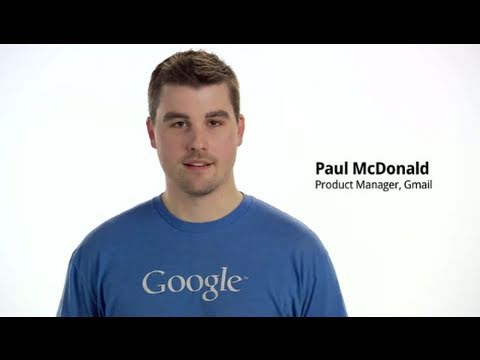
Wouldn’t it be cool if federated search apps could integrate movement technology so seamlessly!?
Articles on Discovery lists a number of categorized resources about discovery services. Categories include:
This great resource page includes more than fifty links to articles on the subject.
I highly recommend that libraries interested in discovery services give extra attention to the articles in the debates and library experiences sections so that they can learn about the technology with their eyes wide open.
You can access my writings about discovery services here.